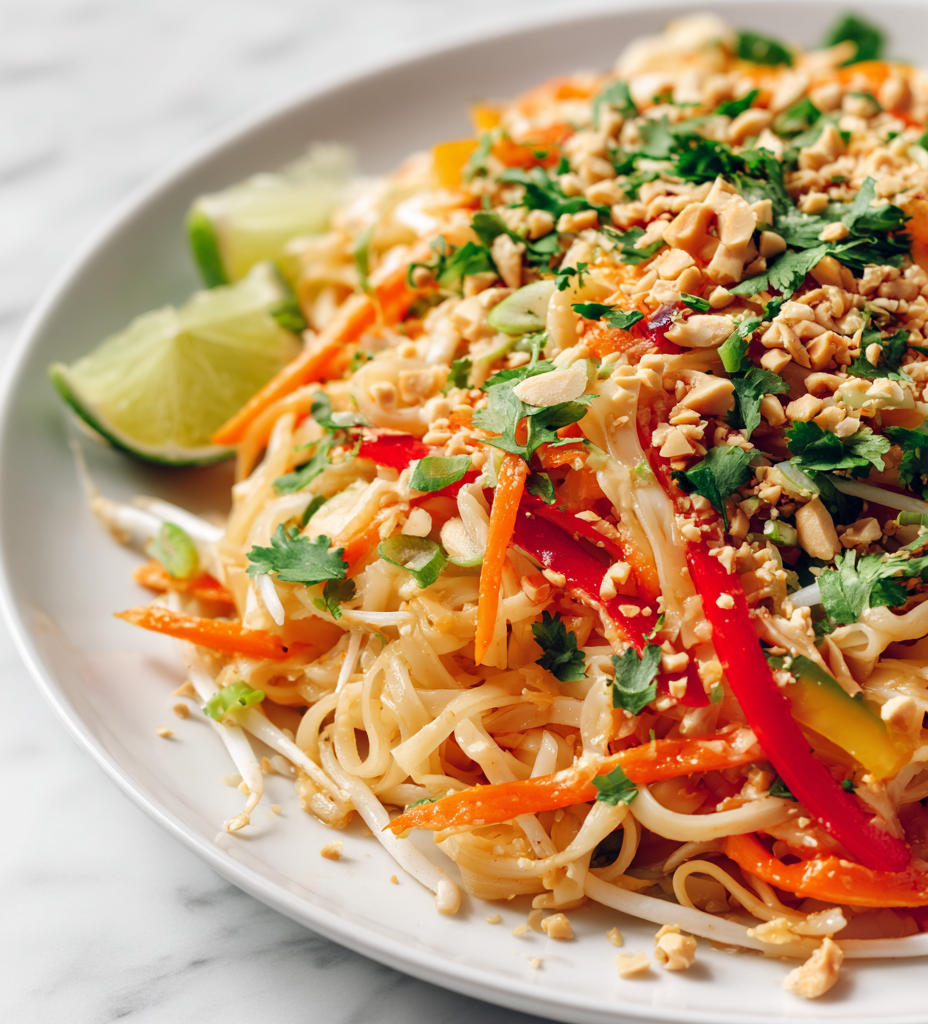
Vegetable Pad Thai has always been my fallback when I want something fast, satisfying, and packed with texture. But I’ve learned that mastering that perfect balance between crispy vegetables, tender noodles, and a sticky, flavorful sauce takes patience and attention to detail. It’s one of those dishes where timing really makes or breaks the experience, and a little practice reveals how each component can shine.
What I love about this recipe is how adaptable it is—use whatever vegetables are in season or lurking in the fridge. It’s surprisingly forgiving once you get the hang of stir-frying at high heat, and the payoff is a plate full of contrasting textures that dance together. This dish isn’t just about quick carbs; it’s about celebrating the art of balancing flavors and crunch in every bite.
Focusing on the art of balancing textures—crisp vegetables, tender noodles, and a sticky sauce—each bite offers a sensory contrast that elevates a humble dish into a memorable experience. This recipe emphasizes the importance of timing and technique to achieve that perfect harmony, making each component shine without overpowering the others.
Balancing textures in every bite
- This dish reminds me of busy weeknights where I just want something quick but still full of flavor.
- Cooking this always takes me back to my first trip to Thailand—those vibrant markets and spicy smells.
- I love how changing up the vegetables can make this feel like a new dish every time—I’ve used everything from zucchini to green beans.
- There’s a quiet pride in getting the sauce just right—sweet, tangy, with a hint of smoky depth.
- Honestly, I feel like I’ve finally cracked the code for that perfect balance of crunch and tenderness.
The story behind this recipe
- This vegetable Pad Thai was born out of a messy fridge and a craving for something vibrant and quick. I started tossing in whatever crunch and color I had—carrots, bell peppers, green beans—just to see if I could make it work. Over time, I realized that focusing on the texture contrast—crisp veggies against tender noodles—really makes the dish stand out, especially when I don’t have time for fuss but still want depth of flavor.
- It’s become my go-to during busy weeks, a way to reclaim a little control over weeknight dinners. I love that it’s endlessly adaptable—swap in whatever’s fresh or lurking in the fridge, and it still comes together fast. Each time I make it, I remember how simple ingredients can turn into something lively and satisfying, even in the chaos of a rushed evening.
- heading:
Trivia and historical tidbits
- Vegetable Pad Thai reflects the adaptability of Thai street food, often customized with whatever fresh vegetables are available.
- The dish’s roots trace back to humble home kitchens where cooks improvised with seasonal produce, making it a flexible, everyday meal.
- Traditionally, Pad Thai was popularized in Thailand during the 1930s as a patriotic stir-fry to promote national identity and economic recovery.
- Vegetarian and vegan versions gained popularity in recent decades, emphasizing plant-based ingredients and local, seasonal veggies.
- In Thailand, the dish is often enjoyed with a squeeze of lime and a sprinkle of crushed peanuts, balancing bright acidity with crunchy texture.
Key ingredients and tips
- Carrots: I like them julienned thin, adding a sweet crunch that contrasts with the soft noodles—use daikon for a milder, crisp bite.
- Bell Peppers: Bright red or yellow peppers give color and a juicy snap, but green bell peppers add a slightly bitter, fresh note if you prefer.
- Tofu: Firm tofu, pressed well, gets crispy on the outside—skip if you want a softer texture, but I love the chewiness it adds.
- Pad Thai Sauce: A zing of lime juice, tamarind, and a touch of fish sauce—smoky, sour, and bright. Substitute soy sauce for a vegan twist, but lose that authentic tang.
- Noodles: Rice noodles should be soaked until just tender—overcooked and they turn mushy, so keep a close eye while boiling for 3-5 minutes.
- Peanuts: Toasted, crushed peanuts add crunch and richness—skip if allergies, but they really tie the dish together with a nutty aroma.
- Green Onions: Fresh and sharp, they brighten the final plate—use scallions or chives if you want a milder onion flavor.
Spotlight on key ingredients
Carrots and Bell Peppers:
- Carrots: I like them julienned thin, adding a sweet crunch that contrasts with the soft noodles—use daikon for a milder, crisp bite.
- Bell Peppers: Bright red or yellow peppers give color and a juicy snap, but green bell peppers add a slightly bitter, fresh note if you prefer.
Tofu and Sauce:
- Tofu: Firm tofu, pressed well, gets crispy on the outside—skip if you want a softer texture, but I love the chewiness it adds.
- Pad Thai Sauce: A zing of lime juice, tamarind, and a touch of fish sauce—smoky, sour, and bright. Substitute soy sauce for a vegan twist, but lose that authentic tang.
Notes for ingredient swaps
- Dairy-Free: Use coconut aminos instead of fish sauce for a similar umami kick, but expect a slightly milder, sweeter note.
- Gluten-Free: Swap soy sauce with tamari or coconut aminos—both keep that salty, savory profile without gluten.
- Vegan: Replace fish sauce with a splash of mushroom soy or additional tamarind paste for depth and tang.
- Sweetener: Honey or agave syrup can replace palm sugar—try to match the sweetness without overpowering the dish’s brightness.
- Vegetables: Zucchini or snap peas work well for crunch and freshness, especially if you want to keep it light and bright.
- Noodles: Shirataki or bean thread noodles are low-carb options but will alter texture—so use sparingly for a different chew.
- Peanuts: Almonds or cashews can add crunch if peanuts aren’t available, but they won’t have quite the same nutty aroma.
Equipment & Tools
- Wok or large skillet: For high-heat stir-frying and tossing ingredients quickly.
- Slotted spoon: To toss and turn ingredients without excess oil or water.
- Small mixing bowl: To whisk together the sauce ingredients.
- Pot for boiling noodles: To cook rice noodles until just tender.
Step-by-step guide to Vegetable Pad Thai
- Equipment & Tools: Gather a wok or large skillet for high-heat stir-frying, a slotted spoon for tossing, and a small bowl for mixing sauce.
- Prepare your ingredients: Julienne 2 carrots, thinly slice 1 bell pepper, chop 3 green onions, and press 200g firm tofu, then cut into small cubes.
- Cook noodles: Bring 4 cups water to a boil (about 100°C/212°F). Add rice noodles, cook for 3-5 minutes until just tender. Drain and rinse with cold water to stop cooking.
- Make the sauce: In a small bowl, whisk together 3 tbsp tamarind paste, 2 tbsp soy sauce, 1 tbsp palm sugar or brown sugar, 1 tsp fish sauce (or extra soy for vegan), and a squeeze of lime juice. Set aside.
- Heat wok: Place over medium-high heat (around 200°C/390°F). Add 1 tbsp oil, swirl to coat.
- Cook tofu: Add tofu cubes, stir-fry for 3-4 minutes until golden and crispy around the edges. Remove and set aside.
- Stir-fry vegetables: In the same wok, add carrots and bell peppers. Cook for 2-3 minutes, until veggies are bright and slightly softened but still crisp. Add green onions in the last 30 seconds.
- Combine everything: Push veggies to the side. Add noodles and sauce to the wok. Toss vigorously for 2-3 minutes, ensuring noodles get coated and heated through. Add tofu back in and mix well.
- Finish and check: Cook until the mixture is hot and slightly sticky, with a glossy appearance. Taste and adjust seasoning with lime or sugar if needed.
- Rest and plate: Let sit for 1 minute. Plate the Pad Thai, garnish with crushed peanuts and extra green onions if desired.
Let the dish rest for 1 minute to settle. Serve hot, garnished with crushed peanuts and extra sliced green onions for texture and freshness.
How to Know It’s Done
- Noodles are tender but not mushy, with a slight chew.
- Vegetables are bright, crisp, and fragrant, with no raw rawness.
- Sauce is well-distributed, glossy, and flavorful with a balanced tang and sweetness.
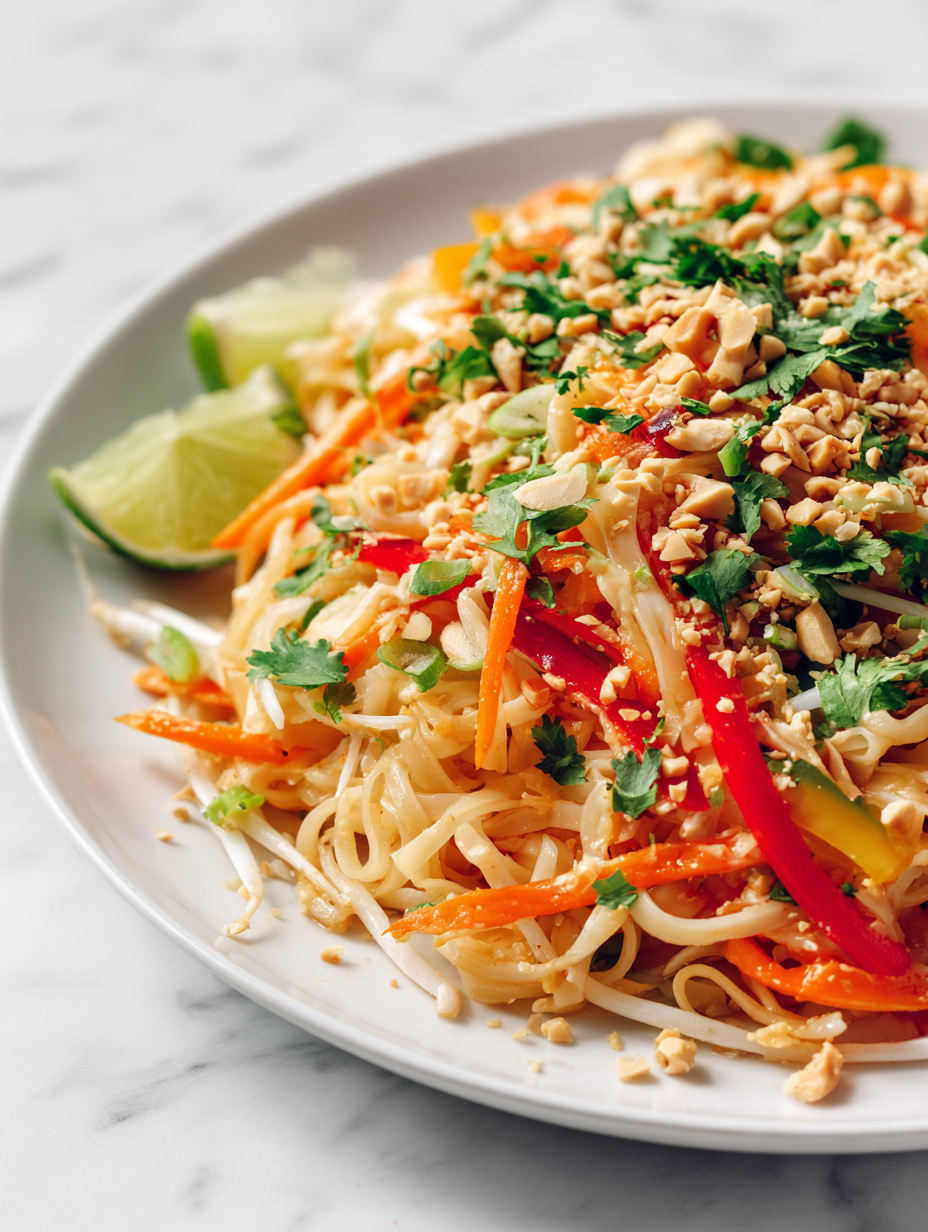
Vegetable Pad Thai
Ingredients
Equipment
Method
- Start by boiling water in a pot and cook the rice noodles for 3-5 minutes until just tender. Drain and rinse with cold water to stop the cooking process, then set aside.
- In a small bowl, whisk together tamarind paste, soy sauce, palm sugar, fish sauce, and lime juice to make the tangy Pad Thai sauce. Set aside.
- Heat your wok or large skillet over high heat, then add a tablespoon of oil, swirling to coat the surface. Once shimmering, add the cubed tofu and stir-fry for about 3-4 minutes until golden and crispy around the edges. Remove and set aside.
- In the same wok, add the julienned carrots and sliced bell peppers. Stir-fry for 2-3 minutes until the vegetables are bright, fragrant, and slightly tender but still crisp. Add the chopped green parts of the green onions in the last 30 seconds.
- Push the vegetables to one side of the wok, then add the cooked noodles and pour the prepared sauce over them. Toss vigorously for 2-3 minutes, ensuring the noodles are evenly coated and heated through. Return the crispy tofu to the wok and mix everything thoroughly.
- Cook for another minute until the mixture is glossy, sticky, and fragrant. Taste and adjust seasoning with additional lime juice or sugar if needed.
- Transfer the Pad Thai to plates, sprinkle generously with crushed peanuts, and garnish with extra green onions if desired. Serve immediately while hot and vibrant.
Pro Tips for Perfect Vegetable Pad Thai
- High heat is your friend → Crank it up early to get that quick sizzle and prevent sogginess.
- Keep noodles slightly underdone → They’ll finish cooking in the stir-fry, avoiding mushy textures.
- Use a slotted spoon for tossing → It helps control the heat and prevents excess oil from pooling.
- Add green onions last → Their bright flavor and crunch are best preserved when added at the end.
- Taste and adjust seasoning before serving → Squeeze extra lime or sprinkle sugar to balance acidity and sweetness.
Common mistakes and how to fix them
- MISSED the heat level? Raise it gradually to prevent burning the aromatics.
- DUMPED too much oil? Use just enough to coat the pan for crisp veggies.
- OVER-TORCHED the noodles? Keep stirring and remove from heat once tender.
- FORGOT to taste? Adjust seasoning with lime or soy before serving for balance.
Quick Fixes for Vegetable Pad Thai
- When sauce is too thick, splash in a bit of warm water and stir till loosened.
- If noodles stick together, rinse with cold water and toss with a tiny oil before reheating.
- Splash soy sauce if the dish tastes flat—boost umami and brightness instantly.
- Patch over overcooked veggies by quickly stir-frying with fresh ones for crunch.
- Shield delicate toppings with a lid during reheating to keep flavors fresh and fragrant.
Prep, store, and reheat tips
- Prep vegetables: Julienne carrots, slice peppers, and chop green onions a day ahead. Keep in airtight containers in the fridge; they’ll stay crisp for up to 24 hours, brightening your stir-fry with fresh crunch.
- Cook noodles early: Boil rice noodles 30 minutes before serving, then rinse and toss lightly with a little oil. Store in an airtight container in the fridge; reheated noodles may be slightly stickier but still tender if warmed gently.
- Make the sauce in advance: Whisk together tamarind, soy, sugar, and lime juice. Keep in a jar in the fridge for up to 2 days. The flavors deepen overnight, but give it a quick stir before using—expect a tangy, vibrant aroma still intact.
- Reheat carefully: Warm leftovers in a wok or skillet over medium heat, stirring frequently. The dish should shimmer with a sticky, glossy coating and smell fragrant with citrus and toasted peanuts. Avoid microwaving for best texture; the noodles can become mushy if overheated.
- Flavor evolution: The dish can taste even better after resting for a few hours, as flavors meld. Just reheat thoroughly, ensuring the noodles are hot and slightly sticky, with a lively aroma of lime and sautéed vegetables.
Top questions about Vegetable Pad Thai
1. How do I prevent the noodles from turning mushy?
Use fresh, firm rice noodles and soak them just until tender—overcooked noodles turn mushy fast.
2. What’s the key to crispy, flavorful vegetables?
Stir-fry vegetables on high heat for 2-3 minutes until crisp-tender and fragrant, but not raw.
3. When should I add the sauce during cooking?
Add sauce at the end and toss quickly for glossy, evenly coated noodles and veggies.
4. How hot should my pan be for stir-frying?
Use a hot wok or skillet—around 200°C/390°F—to get that quick sear and vibrant flavor.
5. How do I get crispy tofu for Pad Thai?
Press tofu well to remove excess moisture, then fry until golden and crispy—about 3-4 minutes per batch.
6. How do I know if my Pad Thai is perfectly balanced?
Adjust seasoning with lime, sugar, or soy to balance sweet, sour, and salty flavors—taste as you go.
7. Can I make this dish vegan or allergy-free?
Replace fish sauce with soy sauce or coconut aminos for vegan or allergy-friendly versions, but expect a different depth.
8. What toppings make this dish extra special?
Garnish with crushed peanuts and fresh green onions for crunch and brightness—don’t skip this step.
9. How should I reheat Pad Thai without losing texture?
Reheat leftovers gently in a skillet over medium heat, stirring often, until hot and glossy.
10. What can I prep in advance for faster cooking?
Prepare vegetables and sauce ahead of time; keep in airtight containers for up to 24 hours to save time.
This vegetable Pad Thai is a reminder that simple ingredients can create something lively and satisfying. It’s a dish that works in a rush and still feels vibrant on the plate. The balance of textures and flavors keeps me coming back, especially when I want something quick but full of character.
In the end, it’s about the small details—crisp vegetables, glossy sauce, and perfectly cooked noodles—that make the difference. It’s a humble dish, but one that celebrates the art of balancing crunch, tenderness, and tang in every bite. Sometimes, those are the meals I look forward to the most.

Hi there! I’m Isabella, the founder and curious foodie behind Crumb Detective. I’ve always believed that every dish has a story to tell — from the secret family recipes passed down through generations to the bold experiments happening in kitchens around the world.