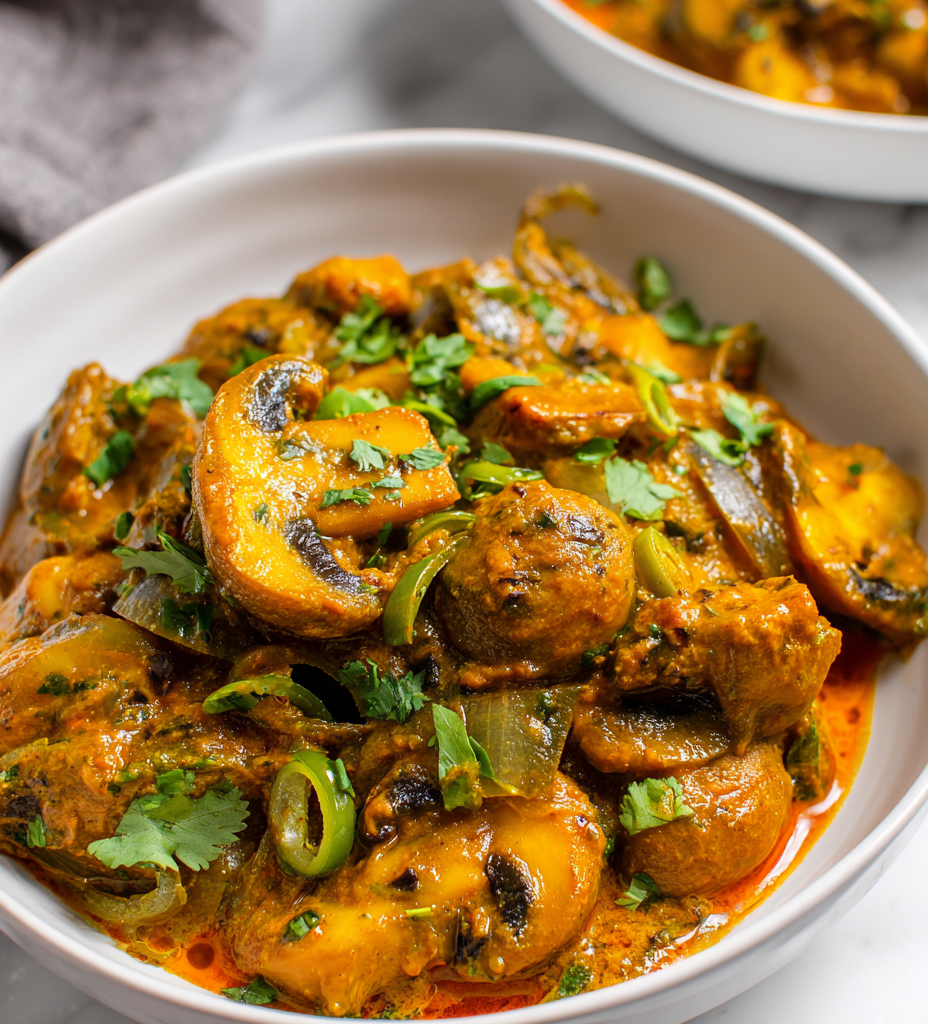

Mushroom masala isn’t just about feeding hungry stomachs; it’s about capturing that deep, earthy aroma that makes you pause at the stove. The mushrooms soak up the spicy tomato gravy, becoming tender and bursting with umami, which somehow makes everything feel a little more comforting, even on the busiest nights.
I love how this dish turns humble mushrooms into a centerpiece of flavor—no fancy ingredients needed, just good quality mushrooms and spices that smell like home. It’s quick enough for a weekday, but rich enough to serve when friends drop by unexpectedly, and everyone leaves with a little more warmth inside.
This recipe is my go-to when I need something satisfying but don’t want to fuss. It’s a kind of culinary reset — simple, honest, and full of that smoky, spicy aroma that makes the kitchen feel alive. Plus, it’s a good excuse to keep those mushrooms on hand, ready to transform into something memorable.
Focusing on the earthy, umami-rich depth that mushrooms bring to a spicy, tomato-based sauce, highlighting how this dish can be a comforting, quick weeknight favorite that celebrates the humble mushroom in a new, flavorful way.
Earthy Comfort in Every Bite
- I remember the first time the aroma of frying mushrooms filled my kitchen; it’s a smell I chase even now.
- There’s a quiet pride in turning simple ingredients into something that feels like a warm hug on a plate.
- Nothing beats the chaos of chopping mushrooms and onions while the spices toast, filling the house with a smoky, spicy scent.
- Cooking this dish always reminds me of lazy Sunday afternoons spent at my grandmother’s, where everything simmered just right.
- I get a little thrill every time I taste that perfect balance of spice and earthiness, knowing I nailed it again.
Inspiration from a Market Stall
I came across a mushroom stall at a local market one rainy afternoon, and the earthy smell pulled me right in. That day, I bought a basket of wild mushrooms and started experimenting with different spice mixes. This recipe is a snapshot of those moments—simple ingredients, bold flavors, and a little bit of nostalgia. It’s a dish that reminds me that sometimes, the best meals are born out of curiosity and a love for the humble mushroom.
Historical & Cultural Insights
- Mushroom masala’s roots trace back to the bustling markets of North India, where street vendors would toss mushrooms into spicy, tomato-laden gravies to warm chilly evenings.
- Historically, this dish evolved as a way to elevate humble mushrooms, making them the star in a sea of rich spices, reflecting a culinary tradition of transforming everyday ingredients.
- During the British colonial period, the popularity of mushroom dishes grew in Indian households, blending local spices with imported mushrooms, creating a unique regional flavor.
- In recent years, mushroom masala has seen a resurgence among vegetarians and vegans, celebrated for its umami richness and adaptability to various diets.
Ingredient breakdown: key components
- Mushrooms: I prefer cremini or baby bella for their meaty texture and rich flavor, but button mushrooms work fine if that’s what you have—just make sure to clean them well to avoid grit.
- Onions & Tomatoes: I use ripe tomatoes and a good-sized onion; they add sweetness and acidity that balance the earthiness of the mushrooms—don’t skimp on the fresh garlic either, it’s the fragrant backbone.
- Spices: Garam masala, turmeric, and coriander are my go-tos; their warmth and aroma really awaken the dish. Feel free to adjust the spice levels if you like it milder or more fiery.
- Cream or Coconut Milk: I like a splash of cream for richness, but coconut milk adds a subtle tropical sweetness and makes it dairy-free—both give the sauce a velvety finish and a shiny look.
- Oil & Seasoning: Use a neutral oil with a high smoke point—canola or vegetable. Toast your spices in hot oil until fragrant, about 30 seconds; it’s the key to unlocking all those deep, smoky aromas.
- Fresh Herbs: Garnish with cilantro for that bright, herbal kick. It adds a fresh contrast to the earthy, spicy gravy—don’t skip it if you want the full flavor experience.
Spotlight on key ingredients
Mushrooms:
- I prefer cremini or baby bella for their meaty texture and rich flavor, but button mushrooms work fine if that’s what you have—just make sure to clean them well to avoid grit.
- Onions & Tomatoes: I use ripe tomatoes and a good-sized onion; they add sweetness and acidity that balance the earthiness of the mushrooms—don’t skimp on the fresh garlic either, it’s the fragrant backbone.
Notes for ingredient swaps
- Dairy-Free: Swap cream for coconut milk. It adds a subtle tropical sweetness and keeps the sauce velvety, though it’s a bit lighter in richness.
- Mushrooms: Use portobello caps sliced thickly if you want more meaty texture, or try shiitake for a deeper, smoky flavor.
- Tomatoes: Canned diced tomatoes work in a pinch, offering convenience and a consistent tang, but fresh ripe tomatoes give a brighter, juicier base.
- Spices: Freshly ground spices are ideal, but if you only have pre-ground, use slightly less as they tend to be more concentrated.
- Oil: Neutral oils like canola or vegetable are best, but ghee adds a nutty richness. Just watch the heat to avoid burning.
- Herbs: Cilantro is classic, but parsley can add a fresh, slightly peppery note if cilantro isn’t available.
Equipment & Tools
- Wide skillet or cast-iron pan: For even heat and better caramelization of ingredients.
- Spatula: To stir and mix ingredients without breaking mushrooms.
- Sharp knife: For chopping onions, tomatoes, garlic, and ginger efficiently.
- Cutting board: Keeps ingredients organized and protects countertops.
Step-by-step guide to Mushroom Masala
- Equipment & Tools: Prepare a wide skillet or cast-iron pan for even heat distribution; a spatula for stirring; a sharp knife for chopping; and a cutting board to keep things organized.
- Heat 2 tbsp oil in the skillet over medium heat (~160°C / 320°F). When shimmering, add 1 tsp cumin seeds. Let crackle for 30 seconds.
- Toss in 1 diced onion (~150g). Cook, stirring frequently, until translucent and golden, about 5-7 minutes. The onion should smell sweet and slightly caramelized.
- Add 3 minced garlic cloves and 1-inch grated ginger; sauté until fragrant (~30 seconds). If it burns, lower the heat.
- Stir in 2 chopped tomatoes (~200g). Cook until they break down and oil starts to separate, about 8-10 minutes. The mixture should turn a dark, glossy red.
- Mix in 1 tsp turmeric, 1 tsp coriander, and 1 tsp garam masala. Toast spices for 30 seconds until fragrant and slightly darker. If they burn, remove from heat.
- Add 300g sliced mushrooms (cremini or button). Cook, stirring occasionally, until they release moisture and become tender (~8 minutes). They should look juicy and slightly shriveled.
- Pour in 1/4 cup cream or coconut milk. Stir well and simmer for another 3-5 minutes until sauce thickens slightly. The sauce should coat the mushrooms evenly, with a velvety sheen.
- Taste and adjust salt and spice. If too thick, add a splash of water; if too thin, simmer a bit longer until it thickens. The sauce should be rich and fragrant, with a balanced heat and aroma.
- Turn off heat. Garnish with chopped cilantro and a squeeze of lemon if desired. Rest for 2 minutes before serving to let flavors meld.
- Serve hot with steamed rice or warm naan. The mushrooms should be tender, the gravy flavorful, and the aroma inviting.
Let the mushroom masala rest for 2 minutes off heat. This helps the flavors settle. Garnish with fresh cilantro and a squeeze of lemon for brightness. Serve immediately while hot, with rice or bread.
How to Know It’s Done
- Mushrooms are tender and juicy, not leathery or shriveled.
- The sauce is glossy, coats the mushrooms evenly, and has a balanced spice aroma.
- The oil separates slightly from the tomato-spice base, indicating proper cooking.
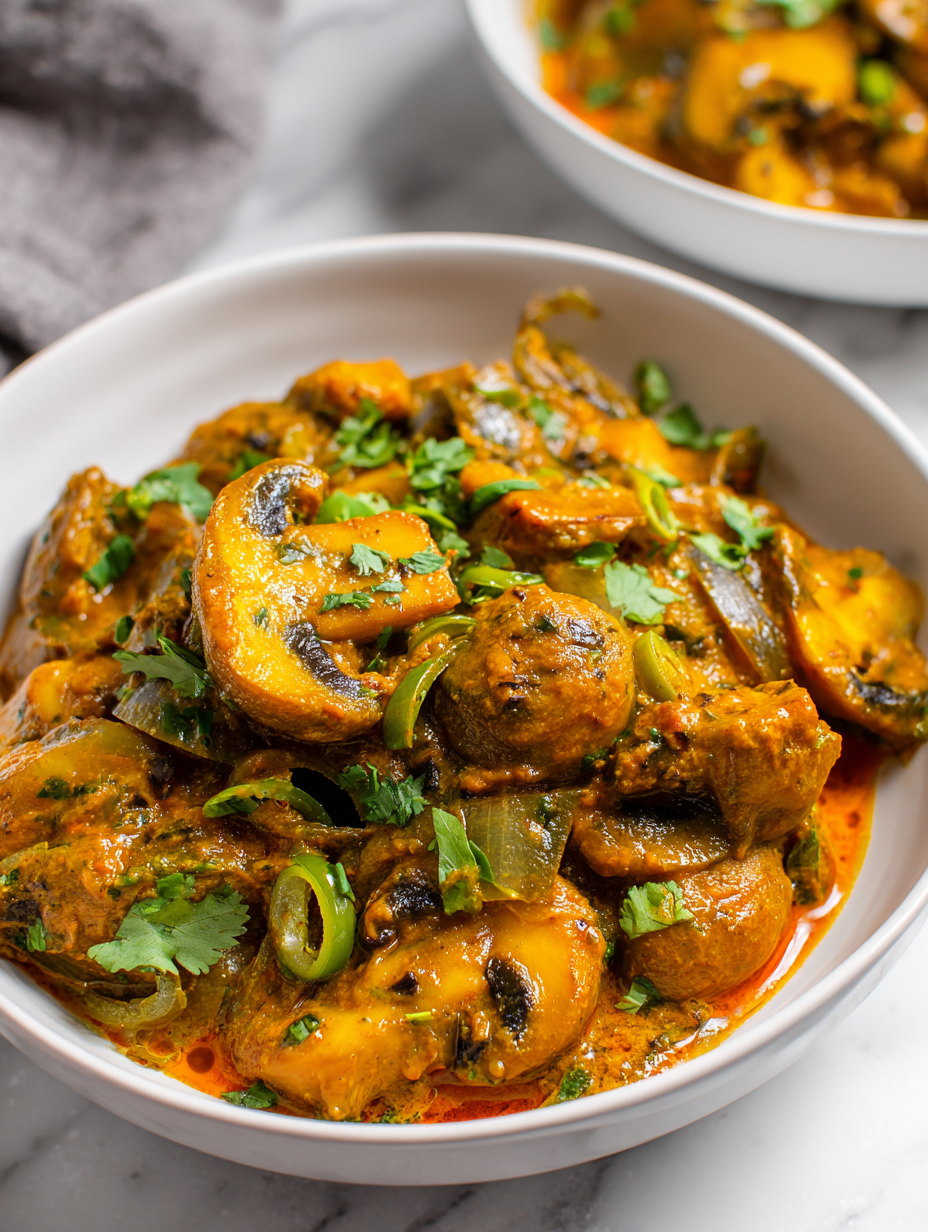
Mushroom Masala
Ingredients
Equipment
Method
- Heat oil in a wide skillet over medium heat until shimmering, then add cumin seeds. Let them crackle for about 30 seconds, filling your kitchen with a warm aroma.
- Add diced onion to the pan and cook, stirring frequently, until translucent and golden, about 5-7 minutes. You should see the onions soften and turn a rich, caramel color.
- Toss in minced garlic and grated ginger, cooking quickly for about 30 seconds until fragrant. The mixture will become aromatic and slightly bubbly.
- Add chopped tomatoes and cook, stirring occasionally, until they break down and the oil starts to separate, about 8-10 minutes. The mixture should turn a glossy, deep red.
- Stir in turmeric, coriander powder, and garam masala, cooking for another 30 seconds until fragrant and slightly darker in color. This step deepens the spice aroma.
- Add the sliced mushrooms and cook, stirring occasionally, until they release moisture and become tender, about 8 minutes. The mushrooms should look juicy and slightly shriveled.
- Pour in the cream or coconut milk and stir well. Let the sauce simmer for another 3-5 minutes until it thickens slightly and coats the mushrooms with a glossy, flavorful gravy.
- Season with salt to taste and give everything a final stir. Remove from heat and garnish with chopped cilantro for a fresh, herbal finish.
- Serve the mushroom masala hot with steamed rice or warm naan, enjoying the rich aroma and tender, earthy mushrooms in every bite.
Tips & Tricks for Perfect Mushroom Masala
- High heat: Sear the mushrooms quickly to enhance their umami and develop a slight char that adds depth.
- Spice toast: Briefly toast your spices in oil until fragrant—this unlocks their full aroma and flavor potential.
- Layer flavors: Add garlic and ginger after spices to prevent burning and ensure a fragrant, not bitter, base.
- Use wide pan: Cook mushrooms in a wide skillet to promote even cooking and prevent steaming, preserving texture.
- Finish with acid: A squeeze of lemon or a dash of vinegar at the end brightens the earthy flavors and balances richness.
- Avoid overcooking: Mushrooms should be tender but still juicy—overcooking turns them rubbery and dulls flavor.
- Deglaze for depth: Splash a little water or broth after sautéing to lift caramelized bits from the pan, enriching the sauce.
Common mistakes and how to fix them
- FORGOT to adjust heat → Mushrooms release moisture if cooked on high heat.
- DUMPED all spices at once → Toast spices first for full flavor release.
- OVER-TORCHED the garlic → Sauté garlic quickly to avoid bitterness.
- MISSED resting time → Let dish sit 2 minutes before serving for flavor melding.
Quick fixes and pantry swaps
- When mushrooms release too much water, splash a bit more oil and increase heat to sear them quickly.
- If sauce becomes too thin, patch with a teaspoon of cornstarch mixed in cold water, then simmer until thickened.
- Splash a few drops of lemon juice if the spice feels dull or flat after cooking.
- When spice aroma is faint, rescue by toasting fresh spices in hot oil for 30 seconds before adding to dish.
- Dumped in too many tomatoes? Shield excess acidity by stirring in a teaspoon of sugar or honey.
Prep, store, and reheat tips
- Prep the mushroom cleaning and chopping ahead—mushrooms brown quickly once cut, so do this just before cooking for best texture.
- Store leftover mushroom masala in an airtight container in the fridge for up to 2 days. The flavors deepen and the sauce thickens slightly.
- Reheat gently on the stovetop over low heat, stirring occasionally, until steaming and fragrant again—watch for bubbling and aroma revival.
- For longer storage, freeze in portions for up to 1 month; expect a slight change in texture, as mushrooms may become a bit softer upon thawing.
- The dish’s aroma becomes more intense after reheating, with the spices mellowing into a richer, more integrated flavor profile.
Top questions about Mushroom Masala
1. What mushrooms are best for mushroom masala?
Use a mix of mushrooms like cremini and shiitake for depth; button mushrooms work too. Look for firm, unwrinkled caps for the best texture.
2. How should I cook the mushrooms?
Cook mushrooms on high heat until they release moisture and turn golden—this intensifies their earthy flavor and keeps them from becoming soggy.
3. How do I season the dish properly?
Add salt gradually during cooking to avoid oversalting. Taste test the sauce at the end and adjust seasoning accordingly.
4. Can I use canned tomatoes?
Use fresh tomatoes or canned diced tomatoes. Fresh tomatoes give a brighter flavor, while canned works well in a pinch and offers consistent acidity.
5. How can I make it creamier?
For a richer sauce, stir in a splash of cream or coconut milk at the end. For dairy-free, coconut milk adds a velvety texture and subtle sweetness.
6. Should I toast the spices?
To deepen flavor, toast your spices in hot oil until fragrant—about 30 seconds. This step is crucial for that smoky aroma.
7. Why should I rest the dish before serving?
Let the finished dish rest for a couple of minutes. It allows the flavors to meld and enhances the overall taste and aroma.
8. How should I store and reheat leftovers?
Store leftovers in an airtight container for up to 2 days in the fridge. Reheat gently on the stove, stirring often, until steaming hot and fragrant again.
9. What if the sauce is too thin or mushrooms overcook?
If the sauce is too thin, simmer on low heat until it thickens slightly. If mushrooms are overcooked, add a splash of water or broth to rehydrate.
10. How do I know when the mushrooms are done?
Avoid overcooking the mushrooms; they should be tender and juicy, not rubbery. Keep an eye on them and remove from heat once cooked through.
This dish isn’t just about mushrooms; it’s about embracing their earthy, umami-rich depth that elevates any weeknight meal. The aroma of spices and the tender mushrooms make it a comforting, satisfying choice, especially when the season calls for hearty, flavorful food.
Whenever I make mushroom masala, I’m reminded that simple ingredients, handled with care, can create something truly memorable. It’s a dish that feels like a little ritual—one that welcomes everyone to the table with warmth and honest flavor.

Hi there! I’m Isabella, the founder and curious foodie behind Crumb Detective. I’ve always believed that every dish has a story to tell — from the secret family recipes passed down through generations to the bold experiments happening in kitchens around the world.