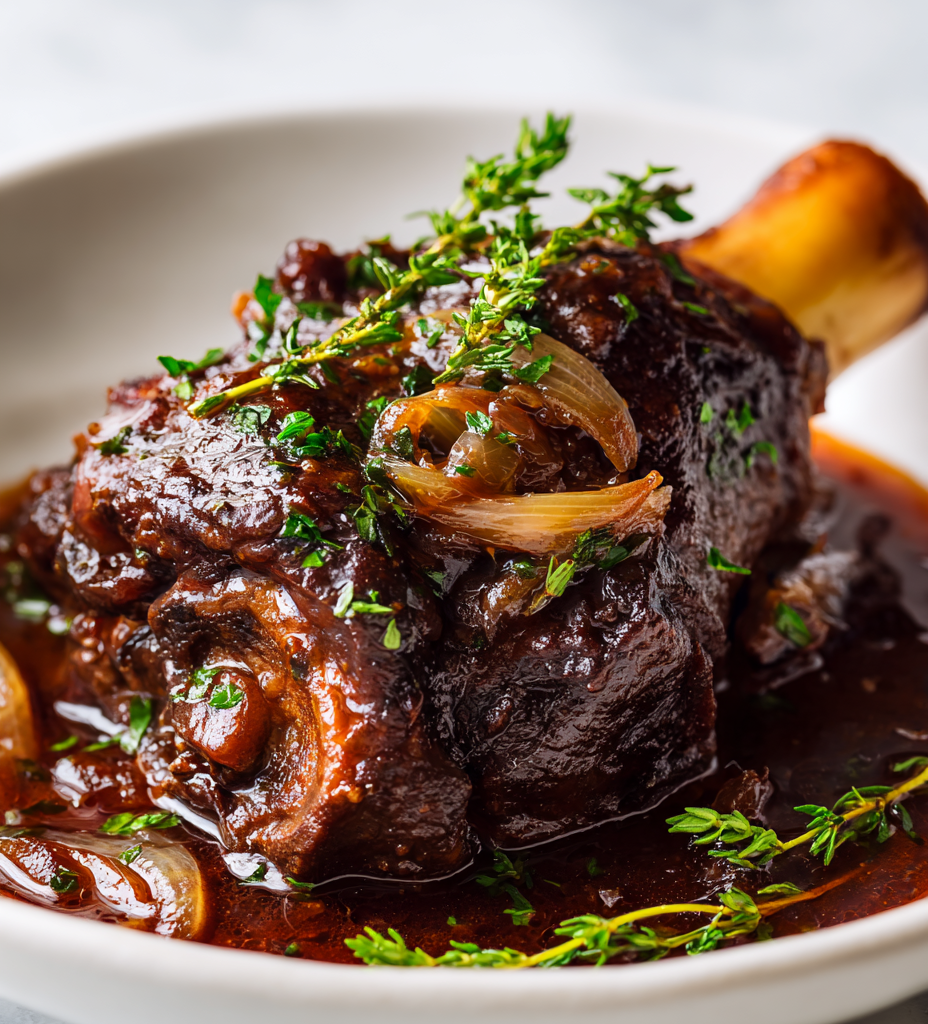
Lamb shanks aren’t about that tender, fall-apart texture everyone seems to chase. I like the chew and the layers of flavor that come with a slow braise, especially when it’s simmered in a robust red wine sauce. It’s honest, hearty cooking that feels like a warm hug after a long day.
There’s something satisfying about tackling a less glamorous cut and turning it into a dish that feels both rustic and refined. The wine cuts through the richness, adding a slight tang and depth that makes every bite feel grounded in tradition. It’s not fancy, but it’s real, and that’s what I keep coming back to.
This recipe is about embracing the imperfect, the textured, the deeply flavored. It’s perfect for slow weekends or a cozy dinner when you want something that’s both satisfying and unpretentious. Every time I make it, I feel a little more connected to the simple joys of good, honest cooking.
Focusing on the less-tender, more textured side of lamb shanks, I find that a slow braise with red wine enhances the meat’s chew and richness, making each bite feel more satisfying and rooted in rustic tradition.
The rustic charm of slow braised lamb
- There’s a raw, primal satisfaction in gnawing on the tender, meaty shanks after hours of slow cooking.
- I love how the red wine’s acidity cuts through the richness, making each bite feel bright and lively.
- Braising these lamb shanks reminds me of Sunday dinners at my grandma’s—comforting, unpretentious, full of flavor.
- Nothing beats the smell of wine and herbs filling the kitchen, stirring up memories of long, lazy weekends.
- I get a quiet thrill knowing I’ve transformed a tough cut into something so deeply flavorful and satisfying.
The inspiration behind this dish
- This dish came about during a cold winter when I was craving something deeply nourishing but with a bit of an edge. I wanted to highlight the lamb’s chew and rustic soul, so I let it simmer in a good red wine—something that would deepen the flavor and add a touch of acidity to cut through the richness. The process became a little ritual, slowly building layers of flavor that felt like a small act of rebellion against the sleek, tender textures everyone seems to chase.
- I remember the first time I made it, I was surprised how forgiving the cut was—tough, sure, but with patience, it transforms. The slow braise turns it into something almost chewy but tender enough to pull apart with a fork. The wine’s aroma mingled with herbs in the kitchen, making the house smell like a cozy, seasoned secret. That day, I realized this dish isn’t about perfection—it’s about giving the less glamorous cuts a chance to shine with honest, unpolished flavor.
- heading: ‘The story behind this recipe’
Trivia and historical tidbits
- Lamb shanks have been a staple in Mediterranean and Middle Eastern cuisines for centuries, valued for their rich, collagen-rich meat that becomes tender with slow cooking.
- Historically, slow braising in wine and herbs was a way to transform tougher cuts into luxurious dishes, making the most of less expensive, tougher meats.
- The use of red wine in braises dates back to medieval Europe, where winemaking regions popularized hearty stews that could be sustained through long winters.
- In some traditions, lamb shanks symbolize abundance and festivity, often reserved for special gatherings or holiday feasts in rural communities.
- The rustic, unpolished style of braised lamb shanks with wine echoes peasant dishes that celebrated simple, hearty ingredients transformed through patience and care.
Ingredient breakdown: key components
- Lamb shanks: I love the richness and chew of these cuts. If you prefer more tenderness, consider a longer braise or adding a splash of broth to keep them moist.
- Red wine: I use a bold, fruity wine that adds depth and a touch of acidity. For a milder sauce, swap in a lighter red or even dark grape juice for sweetness.
- Garlic: I smash and toss in whole cloves for a mellow, roasted aroma. If you love punchier garlic flavor, chop it fine and add earlier for more infusion.
- Herbs: Rosemary and thyme are my go-tos—they hold up well during long cooking. Fresh herbs give a brighter note, but dried work in a pinch if added early.
- Onions and carrots: These add sweetness and body to the sauce. If you’re out, a splash of tomato paste can deepen the flavor and add richness.
- Olive oil: I use a good-quality extra virgin for that fruity, peppery kick. If you’re out, a neutral oil will do, but skip the flavorless options like canola here.
- Salt & pepper: I season generously during cooking to build layers of flavor. Taste as you go—over-salting can overpower the wine and lamb.
Spotlight on key ingredients
Lamb shanks:
- Their connective tissue melts during slow cooking, turning into rich, silky collagen that coats your palate with a meaty, slightly gamey flavor. The meat becomes deeply flavorful and chewy, rewarding patience.
- Red wine: It’s the backbone of this dish—fruity, tannic, and deeply aromatic. The wine’s acidity brightens the rich lamb, and its robust character adds complexity, especially when reduced into a glossy sauce.
Herbs:
- Red wine: I prefer a bold, fruity variety—something with dark berry notes and a touch of spice. It intensifies as it reduces, creating a sauce that’s velvety with a hint of smoky depth. Skip the cheap stuff for real richness.
- Herbs (rosemary & thyme): These woody, fragrant herbs hold up through long simmering, infusing the lamb and sauce with a fresh, piney aroma. Fresh herbs give a brighter, more vibrant flavor, but dried can work if added early.
Notes for ingredient swaps
- Meat Substitutes: Beef shanks or pork shoulder can mimic the texture and richness, but will need slight adjustments in cooking time and seasoning.
- Wine Alternatives: Use dark grape juice or a splash of balsamic vinegar diluted with water for a similar depth, especially if avoiding alcohol.
- Herb Variations: Fresh sage or bay leaves add different aromatic profiles; dried herbs can be used but should be added earlier for better infusion.
- Root Vegetables: Parsnips or turnips can replace carrots to add sweetness and body, adjusting cooking time slightly.
- Broth Options: Mushroom or vegetable broth can substitute beef or chicken broth for a vegetarian or lighter version, but expect a milder flavor.
- Oil Choices: Avocado or grapeseed oil can replace olive oil for a higher smoke point without losing flavor.
- Salt & Pepper: Sea salt or flaky salt can enhance flavor differently; taste as you go to avoid over-salting.
Equipment & Tools
- Dutch oven: For searing, braising, and oven cooking in one vessel.
- Tongs: To handle the hot, browned shanks without piercing the meat.
- Wooden spoon: For scraping up browned bits and stirring vegetables.
- Sharp knife: To trim and prepare vegetables and herbs.
- Fine sieve: To strain the sauce for smoothness.
Step-by-step guide to lamb shanks
- Gather all equipment: Dutch oven or heavy-bottomed pot, tongs, wooden spoon, and a sharp knife. Preheat your oven to 160°C (320°F).
- Pat lamb shanks dry with paper towels to ensure good searing. Season generously with salt and pepper.
- Heat a tablespoon of olive oil in the Dutch oven over medium-high heat. Sear shanks in batches, about 4-5 minutes per side, until deeply browned. Remove and set aside.
- In the same pot, add chopped onions and carrots. Cook until softened, about 5 minutes. Scrape up any browned bits from the bottom.
- Add minced garlic and cook for 30 seconds until fragrant. Pour in a bottle of robust red wine (750ml), scraping the bottom to deglaze. Bring to a simmer and cook until reduced by half, about 10 minutes.
- Return the shanks to the pot, nestling them among the vegetables. Add fresh rosemary and thyme sprigs. Pour in enough beef or chicken broth to nearly cover the meat, about 500ml.
- Bring to a gentle simmer, then cover with a lid. Transfer to the oven and braise for 2.5 to 3 hours, or until the meat is deeply flavorful and pulls away with a gentle tug.
- Every 45 minutes, check the pot. If the liquid reduces too much, add a splash more broth. Keep an eye on the temperature—maintain a gentle simmer.
- Once cooked, carefully remove the shanks. Rest on a plate for 10 minutes. Meanwhile, strain the sauce through a fine sieve into a saucepan. Reduce over medium heat until slightly thickened, about 10 minutes.
- Adjust seasoning with salt and pepper. Serve the lamb shanks topped with the rich red wine sauce, accompanied by crusty bread or mashed potatoes.
Rest the shanks for 10 minutes to allow juices to redistribute. Serve with a drizzle of the sauce, alongside your favorite hearty sides. The sauce can be spooned generously over the meat, enhancing every bite with its deep, wine-infused flavor.
How to Know It’s Done
- Meat: Should be deeply browned and pulling away from the bone.
- Sauce: Should be rich, glossy, and coat the back of a spoon.
- Temperature: Lamb meat should reach an internal temp of 85°C (185°F) for optimal flavor and texture.
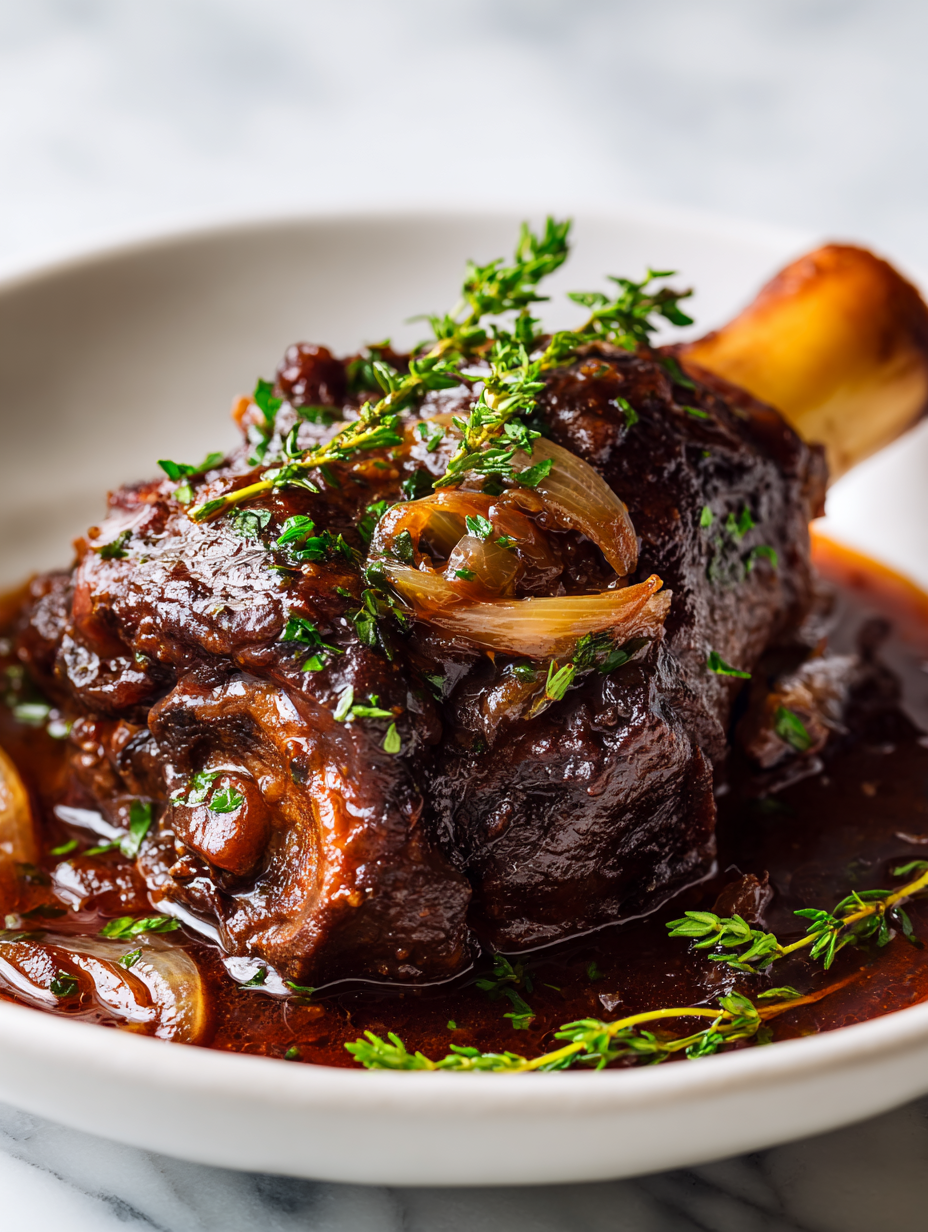
Slow Braised Lamb Shanks in Red Wine Sauce
Ingredients
Equipment
Method
- Preheat your oven to 160°C (320°F). Pat the lamb shanks dry with paper towels, then season generously with salt and pepper on all sides.
- Heat a tablespoon of olive oil in a heavy Dutch oven over medium-high heat until shimmering. Carefully place the shanks in the pot, searing each side for about 4-5 minutes until deeply browned and fragrant. Use tongs to turn them, ensuring an even crust develops.
- Remove the browned shanks and set aside. In the same pot, add chopped onions and carrots, cooking for about 5 minutes until they soften and release a sweet aroma. Stir occasionally with a wooden spoon, scraping up any browned bits from the bottom.
- Add minced garlic to the vegetables and cook for 30 seconds until fragrant, filling the kitchen with a warm, pungent aroma. Pour in the red wine, scraping the bottom of the pot to loosen any flavorful browned bits, and bring to a simmer.
- Let the wine simmer gently, reducing by half over about 10 minutes, until it turns a rich, glossy deep red. Return the lamb shanks to the pot, nesting them among the vegetables, then add the sprigs of rosemary and thyme.
- Pour in enough broth to nearly cover the shanks, about 500ml. Bring the mixture to a gentle simmer, then cover the Dutch oven with its lid. Transfer the pot to the oven and braise for 2.5 to 3 hours, or until the meat is deeply flavorful, pulling away from the bone with a gentle tug.
- Every 45 minutes, check the pot and add a splash more broth if the liquid reduces too much. Keep the simmer gentle to prevent the meat from becoming tough and allow the flavors to meld beautifully.
- Once cooked, carefully remove the shanks and set aside to rest for about 10 minutes. Meanwhile, strain the sauce through a fine sieve into a saucepan, discarding the solids. Reduce the sauce over medium heat until it thickens slightly and becomes glossy.
- Taste and adjust seasoning with salt and pepper. Serve the lamb shanks topped with the rich, wine-infused sauce, alongside crusty bread or hearty mash for a complete, comforting meal.
Pro tips for perfect lamb shanks
- Bolded: Sear shanks thoroughly until deeply browned—to develop rich, caramelized flavors that form a tasty crust.
- Bolded: Deglaze the pan with wine after searing—scrape up browned bits to maximize flavor in your sauce.
- Bolded: Reduce wine until it’s thick and glossy—this intensifies the wine’s fruity and smoky notes.
- Bolded: Keep the braise at a gentle simmer—avoid boiling to prevent meat from becoming tough, and let flavors meld slowly.
- Bolded: Rest the lamb shanks before serving—allowing juices to redistribute results in more tender, flavorful meat.
- Bolded: Strain and reduce the sauce—this concentrates the flavors and creates a silky, luxurious finish.
Common mistakes and how to fix them
- FORGOT to sear the shanks thoroughly → Sear until deeply browned for flavor depth.
- DUMPED the sauce before reduction → Simmer gently until glossy and coats the back of a spoon.
- OVER-TORCHED the herbs → Add herbs later in cooking to preserve aroma and flavor.
- SKIPPED resting the meat → Rest for 10 minutes to retain juices and improve texture.
Fast fixes and pantry swaps
- When sauce shimmers and thickens, it’s ready—don’t over-reduce and turn it bitter.
- Splash a bit of water or broth if the sauce becomes too thick or starts to burn.
- Patch a broken sauce with a teaspoon of cold water while stirring vigorously.
- DUMPED the wine before reducing? Add a splash more and simmer until glossy.
- Shield the lamb shanks from over-torching by lowering oven or stove heat if the crust darkens too fast.
Prepping and storing in advance
- You can prep the vegetables and sear the lamb shanks a day ahead; store covered in the fridge for up to 24 hours. The aroma of browned meat and herbs will be even more inviting when you start cooking.
- The fully braised lamb and sauce can be cooled completely and kept in an airtight container in the fridge for up to 3 days. The wine-infused aroma will mellow but still carry a deep, savory scent.
- Reheat gently in a low oven (around 150°C / 300°F) or on the stove over low heat. Expect the meat to become even more tender, and the sauce to thicken further—look for a glossy, moist finish.
- For longer storage, freeze the cooled dish in portions for up to 2 months. Thaw overnight in the fridge, then reheat slowly until bubbling and fragrant—the rich, deep wine aroma will remind you of slow weekends.
Top questions about lamb shanks
1. How can I tell if lamb shanks are fresh?
Look for shanks with a good amount of marbling and firm bone; they should feel heavy for their size and have a deep, meaty aroma.
2. What kind of wine works best for the sauce?
Use a dry red wine like Cabernet Sauvignon or Merlot for a robust sauce with layered fruit and tannins. Avoid overly sweet or cheap wines.
3. How do I get a good sear on the lamb shanks?
Sear the shanks until they’re deeply browned, about 4-5 minutes per side, until a rich, caramel crust forms. This builds depth in the flavor.
4. How long should I braise the lamb shanks?
Cook the lamb low and slow—around 160°C (320°F) in the oven for 2.5 to 3 hours—until the meat is deeply flavorful and pulls away from the bone.
5. Can I make this dish in advance?
Yes, you can prepare the dish a day ahead. Reheat gently on the stove or in the oven, and the flavors will deepen overnight.
6. How do I fix a sauce that’s too thin or too thick?
If the sauce is too thin, simmer it over medium heat until it thickens and coats the back of a spoon. If too thick, add a splash of broth or water.
7. Can I use dried herbs instead of fresh?
Use fresh herbs for a brighter aroma, but dried herbs can work if added early to infuse during slow cooking. Adjust timing accordingly.
8. How do I know when the lamb is cooked perfectly?
Check for doneness by testing if the meat pulls away easily from the bone and is tender but still has some chew. The sauce should be glossy and aromatic.
9. What are good flavor boosters for the sauce?
Add a splash of balsamic vinegar or a small amount of tomato paste to deepen the sauce’s richness if desired.
10. What’s the best cookware for braising lamb shanks?
Use a heavy-bottomed pot or Dutch oven to prevent scorching and ensure even heat during the braise.
This dish isn’t just about the meat; it’s about the slow build of flavor, the rich aroma of wine and herbs filling the kitchen. When you finally scoop that tender, flavorful lamb onto your plate, it feels like an honest reward for patience and care.
In these hectic times, I find that taking the time to do this slow braise is a small act of rebellion—an ode to tradition and the joy of unpolished, soulful cooking. It’s a reminder that some of the best meals come from simple, honest ingredients treated with patience and a little love.

Hi there! I’m Isabella, the founder and curious foodie behind Crumb Detective. I’ve always believed that every dish has a story to tell — from the secret family recipes passed down through generations to the bold experiments happening in kitchens around the world.